Best Time to Go Parasailing in St Maarten: Month-by-Month Guide

The best time to go parasailing in St Maarten is December through April, when the dry season holds, the trade winds settle into a steady rather than gusty pattern, and Orient Bay stays glassy on most mornings. May and June come in a close second: fewer cruise ships, softer hotel rates, and the same flight running daily over a quieter bay. September and October are the two months to plan around rather than book blind, since they sit at the peak of the Atlantic hurricane season. I clip harnesses on Bikini Beach most days of the year, and this guide is built on what actually grounds a flight here, not a generic Caribbean weather primer.
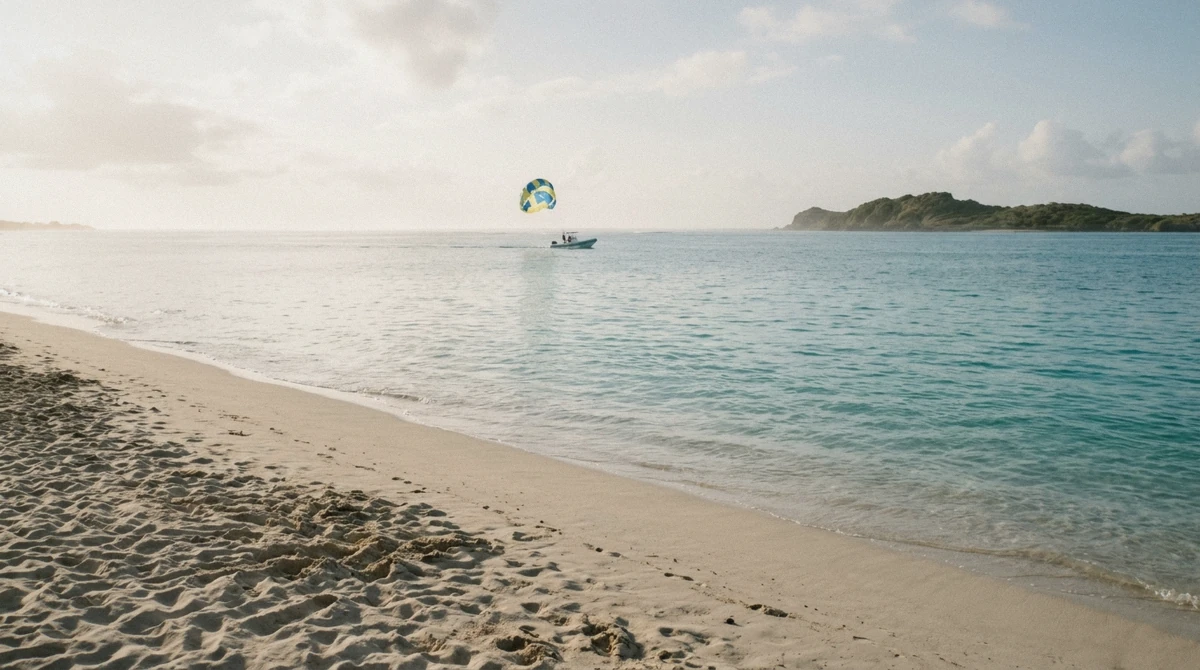
Quick answer
December through April is the best time to go parasailing in St Maarten: the dry season holds, the northeast trades stay steady rather than gusty, and Orient Bay is glassy on most mornings. May and June are the value runner-up, with thinner crowds and the same $80 flight. September and October carry the highest odds of a scrubbed slot, since they sit at the peak of the Atlantic hurricane season.
Key takeaways
- December through April is the reliable window: dry season, steady trades, the clearest skies of the year
- May and June trade a little wind reliability for thinner crowds and calmer hotel rates
- September and October carry the highest cancellation odds, right at the peak of hurricane season
- Wind grounds a flight here far more often than rain does, and mornings are usually the calmest part of any day
- The first slot after the beach opens is the best time of day, before the afternoon trades build over the bay
- The $80 flight price holds year round; only the crowds and the scrub odds change with the season
The Year Over Orient Bay at a Glance
Read the Verdict column first if you only have a minute: it names the trade-off for that month in three to five words, everything else in the row backs it up. Here is how the twelve months compare for our St Maarten parasailing flight on this side of the island.
| Month | Wind & Sea | Crowds | Verdict |
|---|---|---|---|
| January | Steady northeast trades, brisk but flyable mornings | High, cruise season | Very good, book the early slot |
| February | Trades still firm, driest air of the year | High, cruise peak | Best overall, if you take the first flight |
| March | Winds easing off the January-February peak | High, cruise season tail | Very good, a touch calmer |
| April | Lightest trades of the dry-season stretch | High, cruise season tail | Best all-round month |
| May | Mild trades, first passing showers | Moderate, shoulder season | Excellent value, calmer bay |
| June | Hurricane season opens, mild trades | Low to moderate, shoulder | The quiet sweet spot |
| July | Warm, humid, scattered squalls possible | Moderate | Good, watch the weekly forecast |
| August | Peak heat, tropical waves start passing | Moderate | Good, but wave-watching begins |
| September | Hurricane season peak, most cancellation risk | Low | Riskiest month, watch forecasts closely |
| October | Still peak hurricane risk, unsettled | Low | Riskiest month, watch forecasts closely |
| November | Storm activity tapering, trades returning late month | Low to moderate, shoulder | Good value, improving fast |
| December | Christmas winds building, dry season returns | High, cruise season begins | Very good, book ahead of the holidays |
No two adjacent months share a verdict here on purpose. September and October look identical because they genuinely are, both sitting inside the same six-week stretch of peak hurricane risk.
Typical temperatures follow the same two-season pattern as the wind. Figures below are seasonal averages, not a forecast for any single day.
| Month | Air High | Sea Temp | Rain |
|---|---|---|---|
| January | 79°F (26°C) | 79°F (26°C) | Low |
| February | 78°F (26°C) | 79°F (26°C) | Low |
| March | 80°F (27°C) | 80°F (27°C) | Low |
| April | 81°F (27°C) | 81°F (27°C) | Low |
| May | 82°F (28°C) | 82°F (28°C) | Moderate |
| June | 83°F (28°C) | 82°F (28°C) | Moderate |
| July | 85°F (29°C) | 83°F (28°C) | Moderate |
| August | 87°F (31°C) | 84°F (29°C) | High |
| September | 88°F (31°C) | 84°F (29°C) | High |
| October | 86°F (30°C) | 83°F (28°C) | High |
| November | 84°F (29°C) | 82°F (28°C) | Moderate |
| December | 80°F (27°C) | 81°F (27°C) | Low |
Reading the Numbers
Two things stand out. First, the island barely moves five degrees across the whole year, winter highs typically run 77-82°F (25-28°C) and summer highs 82-88°F (28-31°C), so heat is never really the deciding factor for a flight. Second, the sea itself is a non-issue: it holds 79-84°F (26-29°C) in every single month, so water temperature has never once been the reason a flight gets pushed to the next slot.
Figures are typical seasonal ranges in line with meteosxm.com data for the island; check the current forecast close to your dates.
December to April: Christmas Winds and Cruise Crowds
This is the stretch I tell most first-time visitors to aim for. The dry season is in full swing, and what locals call the Christmas winds, the northeast trades blowing at their strongest roughly December through February, deliver brilliant visibility and a steady breeze that keeps the boat comfortable and the parasail canopy full. The trade-off is that those same strong trades mean more captain's-call mornings on our exposed, east-facing bay, so a wind delay of thirty or forty minutes while the crew waits for a lull is not unusual in January and February specifically. March and April ease off that peak, the trades soften, and I'd rank those two months as the calmest flying of the entire dry season.
The other half of this window is crowds, and they are real. Cruise high season runs December through April, with up to four ships in port on a busy day, and a good share of those passengers make their way to Orient Bay by late morning. Combine that with the driest, clearest weather of the year and you get the busiest four months on the beach, full boats, and slots that fill fast on holiday weeks in particular.
- Christmas winds: northeast trades strongest roughly December through February
- March and April are the calmest flying inside this dry-season window
- Cruise high season runs the same four months, up to four ships at once
- Book ahead of Christmas, New Year and the February half-term weeks specifically
May and June: The Quiet Sweet Spot
If I had to send a repeat visitor here for the best combination of conditions and calm, I'd point them to May or June. Both still sit inside or right at the edge of the dry season, so mornings are typically clear and the trades have eased from their winter peak into something milder and more consistent. Rain starts to reappear as the occasional short afternoon shower rather than a daily event, and it rarely touches a morning flight.
What actually makes this window the sweet spot is what's missing: the cruise crowds. Ship traffic drops off sharply once the winter season ends, hotel rates soften across the French side, and Bikini Beach itself feels like a different, quieter place than it does in February. The flight still runs daily at the same $80, the boat is just easier to get a good slot on, and the beach isn't packed by ten in the morning. Every dollar around that fare, taxi, tip and photo package included, is broken down in our cost of a parasailing day guide.
- Mild trades, easing further from the winter peak
- Occasional short afternoon showers, rarely a morning problem
- Cruise traffic drops sharply, so the beach and the boat both feel calmer
- Same $80 flight, easier booking, softer hotel rates on this side of the island
July to November: Hurricane Season, Honestly
I'd rather give you the honest picture than a sales pitch. The Atlantic hurricane season runs officially from 1 June to 30 November, with the highest statistical risk concentrated in September and October. I'm not going to pretend that risk away: Hurricane Irma made a direct Category 5 landfall on Saint-Martin on 6 September 2017, and the island rebuilt from real, widespread damage. That's the reference point, not a scare story, and it's the reason I take late-summer wind forecasts seriously rather than glossing over them.
What this actually means for a booked flight is more mundane than it sounds. Most days in July and August are ordinary Caribbean summer, warm, humid, with scattered squalls that pass through and clear within the hour. September and October are genuinely the two months where I'd watch the weekly forecast before locking in dates, since a tropical wave or a named storm passing anywhere near the island can ground flights for a day or more at a time. November is the quiet turn, storm activity tapers off through the month and the trades start returning by its second half, so I treat late November as the start of the shoulder season rather than the tail of the risky stretch.
- Hurricane season: 1 June to 30 November, official Atlantic window
- Peak risk: September and October, the two months to watch a weekly forecast for
- Irma made Category 5 landfall on Saint-Martin on 6 September 2017, the honest reference point
- Late November tapers into the shoulder season as storm activity fades and trades return
What Actually Grounds a Flight Here
Most first-timers assume rain is what cancels a parasail flight. It's actually wind. A passing shower during the wet season, June through November, almost never stops the boat, we simply wait it out on the sand for ten minutes and go back to flying once it clears.
Wind is a different story: it's the one variable that decides whether the canopy flies straight, stays under control on launch and landing, and keeps the tow line predictable, and it's why the captain makes the final call on any given morning rather than a fixed rulebook. That's true whether the wind in question is a January trade gust or a September system passing offshore, the mechanism is the same even though the season looks completely different. For the full picture of how the crew manages wind, and who the limits rule out entirely, see our safety and restrictions guide.
Morning or Afternoon Over the Bay?
Morning, and it isn't close. Orient Bay faces east into the trades, which means the wind is typically at its lightest right after we open in the morning and builds steadily through the day as the afternoon sea breeze layers on top of the base trade wind. I fly the first slots of the day whenever I have a choice myself: the water is glassiest, the light over Pinel Island and Green Cay is softest for photos, and the odds of a wind delay are lowest.
If you're arriving from a cruise ship, the same logic applies twice over, book the earliest slot on the Orient Bay flight the ship's schedule allows, since it protects both your flight and your buffer for getting back to the pier.
Ship Days, Holidays and Other Crowd Traps
Two crowd patterns matter more than the rest. The first is cruise season itself, December through April, when up to four ships can be docked at the Point Blanche piers on the same morning and a meaningful share of those passengers head straight for Orient Bay. On a genuine four-ship day, the beach fills earlier and slots on the boat go faster than on a quieter Tuesday. The second is the holiday calendar: Christmas week, New Year and the February school-break weeks stack cruise crowds on top of an already busy dry season, and those are the mornings I'd book several days ahead rather than walking up.
If you're timing a flight around a cruise stop specifically, our cruise-day logistics guide walks through the pier-to-bay timeline and the buffer you actually need before all-aboard.
If Weather Scrubs Your Slot
The policy here is simple and it's worth knowing before you book rather than after. Light rain during a passing shower almost never scrubs a flight, we wait it out. A genuine wind scrub, the crew calling it unsafe to fly, means you're rebooked into another slot that day if one is open, or refunded in full if it isn't.
Free cancellation also applies up to 24 hours before your flight, so booking a slot ahead of time carries no real downside even in the shakier months.
So When Should You Fly?
If you want the safest bet, aim for December through April and take the earliest slot you can get, especially in January and February when the trades run strongest. If you'd rather trade a little crowd-free calm for the same conditions, May and June deliver nearly the same reliability with a much quieter beach and better hotel rates. Photographers get the clearest light and water in the winter window; budget-minded travelers do best in May or June; cruise passengers, honestly, get whatever morning the ship's schedule hands them, and our cruise-day logistics guide covers how to make that morning work.
Whatever month you land in, flying over Orient Bay is a fifteen-minute flight, not a full-day commitment, so it fits almost any itinerary once the wind cooperates. Still weighing whether the flight itself earns a slot in your trip? Our worth-it verdict on the Orient Bay flight settles that question first.
Timing Questions About Parasailing in St Maarten
What is the single best month to go parasailing in St Maarten?
If I had to pick one, April. The trade winds have eased from their January-February peak, the dry season is still fully in effect, and it sits at the tail end of cruise season before the real summer crowds and hurricane-season risk begin.
Is September a bad time to fly in St Maarten?
It's the riskiest month for a scrubbed slot, since it falls at the statistical peak of Atlantic hurricane season. Flights still run on ordinary days, but I'd watch the weekly forecast before locking in dates and keep a spare morning in the plan.
How far in advance should I book during the winter season?
A few days ahead at minimum, and a week or more around Christmas, New Year and the February school-break weeks. Cruise season pushes demand up at the same time the driest weather does, so the earliest morning slots are the first to go.
Does rain ever cancel a parasail flight over Orient Bay?
Rarely on its own. A passing shower during the June-to-November wet season usually means a short wait on the sand, not a cancellation. Wind, not rain, is what actually grounds the boat.
Is morning or afternoon better for parasailing in St Maarten?
Morning, clearly. Orient Bay faces east into the trades, so wind is typically lightest right after we open and builds through the afternoon as the sea breeze layers on top of it.
What happens if my flight gets cancelled for wind?
You're rebooked into another slot that day if one's available, or refunded in full if it isn't. Free cancellation up to 24 hours before your flight also applies, so booking ahead carries no real risk.